
REVIEW · SOUTH AFRICA
Whale, Dolphin & Penguin Island Cruise
The best part of this Algoa Bay cruise is its range. In four hours, you might watch dolphins race the bow, spot a humpback whale near the boat, and look toward St. Croix Island for African penguins. It is a calm, wildlife-first outing rather than a fast ride from one sight to the next.
I like the small maximum group of 20, which leaves room for questions and photographs. I also like the tree-planting campaign used to balance the cruise’s carbon footprint, plus the crew’s clear concern for the bay and its animals.
The main catch is simple: wildlife follows its own timetable. You may see whales, dolphins, penguins, seals, or seabirds, but no sighting is guaranteed. Rough water and weather can also affect the trip.
Key details before you book
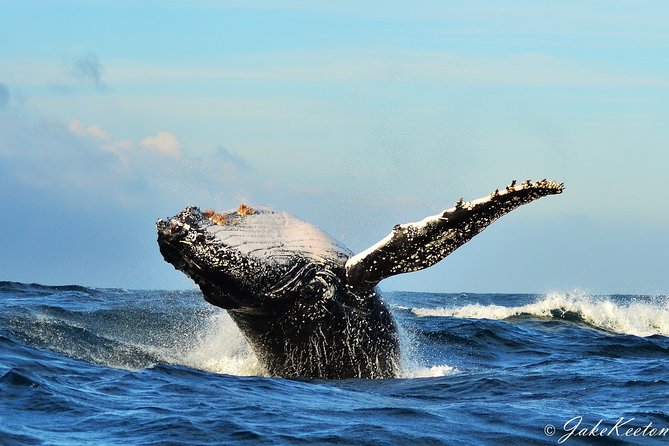
- Humpback whales are seasonal: They can be seen from June into early December, with returning females and calves often appearing from October.
- Dolphins are the most reliable sight: Indo-Pacific bottlenose dolphins live in the bay year-round, while huge pods of common dolphins may appear farther offshore.
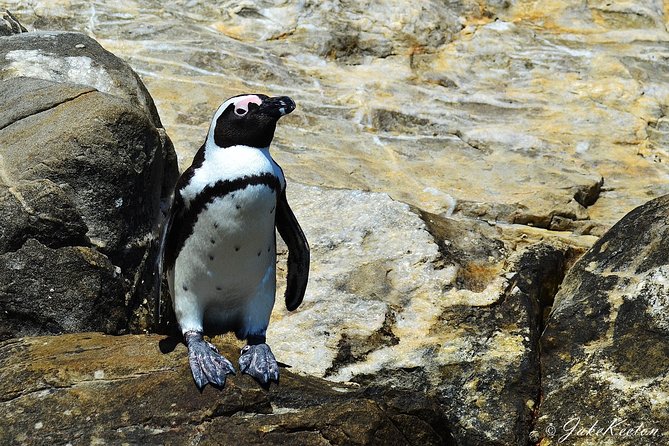
- St. Croix Island is the penguin stop: You stay on the boat and view endangered African penguins around the island.
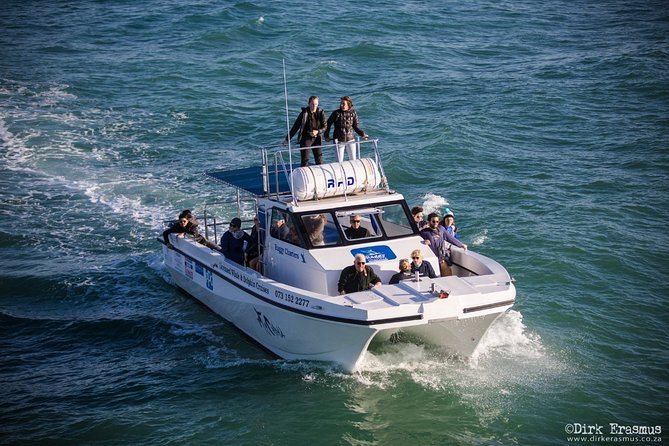
- The boat is small and the pace is unhurried: The twin-engine catamaran carries no more than 20 people.
- The crew adds real conservation context: Jake and the team explain animal behavior, local species, and the pressures facing the bay.
- The outing runs once a day: Plan around the 8am departure from Nelson Mandela Bay Yacht Club.
Setting out from Port Elizabeth at 8am
You meet the crew at Dom Pedro Jetty beside the Nelson Mandela Bay Yacht Club in Port Elizabeth, now also called Gqeberha. The start time is 8am, and the trip returns to the same point after about four hours.
Before leaving, you receive a short safety briefing. The boat is a twin-engine catamaran, and life jackets are available for every age. The small passenger limit matters here: you are not packed into a large sightseeing vessel, so it is easier to hear the crew and shift your view when an animal appears.
This is a sea outing, not a guaranteed animal parade. The boat may cover shallow water near beaches, the waters around St. Croix Island, and farther offshore areas where baitfish attract larger dolphin pods and seabirds. The crew’s job is to look, listen, and choose the best route for the conditions.
The cruise only runs once a day. That makes the schedule easy to understand, but it gives you less flexibility if you have a tight day in Port Elizabeth. I would keep the rest of your morning reasonably open, since the boat is designed to spend time watching animals rather than rushing back to the jetty.
More Whale Watching in South Africa:
- Húsavík: Big Whales and Puffin Island Speedboat Tour
★ 4.8 · 979 reviews - Swim with Whale Sharks in the Ningaloo Reef: 3 Island Shark Dive
★ 5.0 · 919 reviews - Pico Island: Azores Whale & Dolphin Watching on Zodiac Boat
★ 4.8 · 408 reviews
Whale season from June to early December
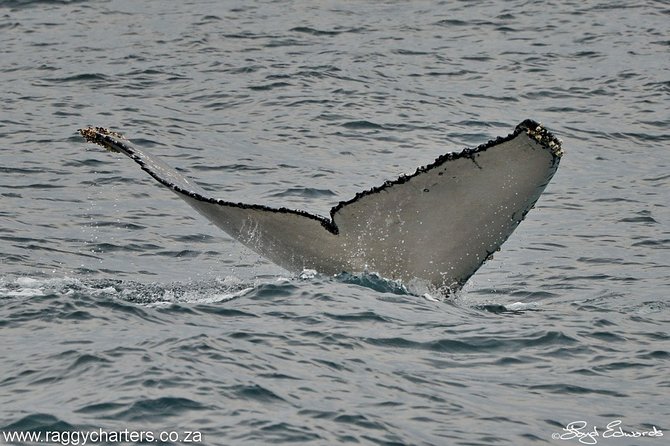
Whales are one of the biggest reasons to choose this cruise, but timing affects your chances. Humpback whales pass through Algoa Bay from June to early December as they travel along Africa’s east coast toward breeding areas.
From October, they make the return journey, and females may be accompanied by calves. That can make the later part of the season especially meaningful, though the exact sighting still depends on the animals’ movements.
Southern right whales are generally seen close to shore from July through September. The trip can also produce sightings of Bryde’s whales and minke whales, but these are possibilities rather than promises.
The crew does not simply point at a whale and move on. The value is in learning how the animal is moving, why it is in the bay, and how to watch without disturbing it. A close sighting can be thrilling, but a patient look at a distant blow or tail may be the more responsible encounter.
Bring realistic expectations. A whale may surface only briefly, and the sea can make photography difficult. You will get more from the experience if you watch the water as well as your camera screen.
Dolphins that race the bow
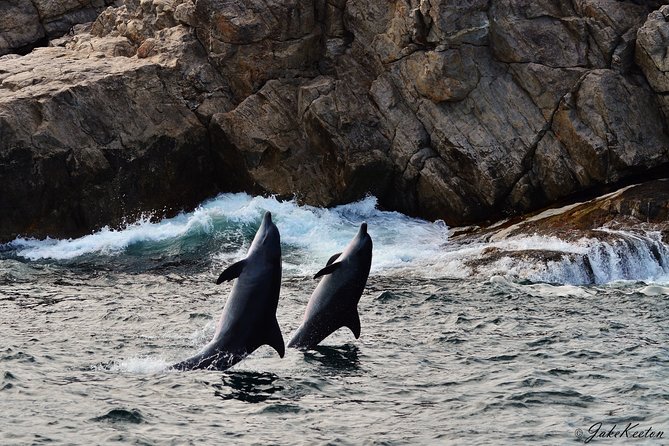
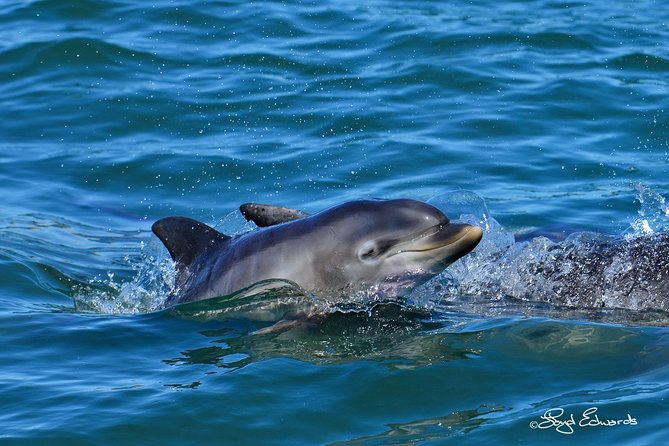
Dolphins are the most dependable part of the outing. Indo-Pacific bottlenose dolphins can be seen year-round in Algoa Bay, often in groups ranging from 10 to 400. They favor shallow water near the beaches and around St. Croix Island.
These dolphins may come close to the catamaran and ride in the bow wave. This is the kind of sighting that turns a quiet boat ride into a lively one: you watch the water ahead, then a fin appears, disappears, and returns beside the boat.
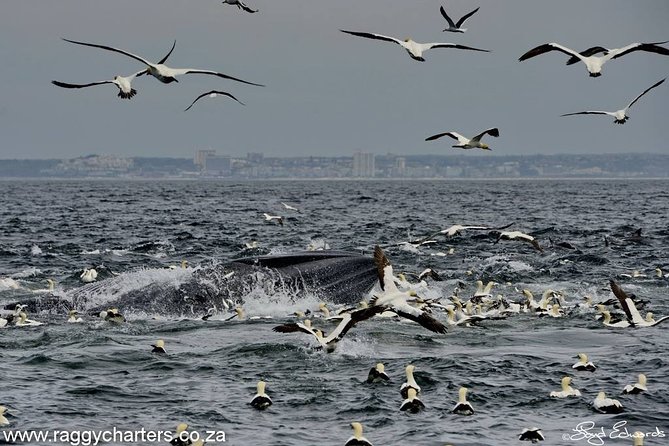
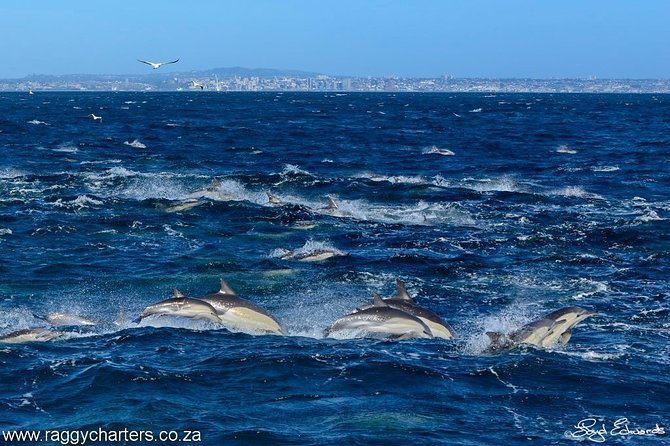
Common dolphins are another possibility. They can gather in groups of 1,000 to 2,000 and move at impressive speed farther offshore. Their presence is linked to large shoals of baitfish, and they are often seen in the open water during trips toward the bird islands.
Algoa Bay also has humpback dolphins. The exact information provided for this species is limited, so the crew’s explanation on the day is especially useful. Ask questions. The small boat and limited group size make it easier to get an answer instead of simply listening to a general announcement.
The contrast between bottlenose dolphins near the boat and common dolphins farther offshore is one of the most interesting parts of the route. One encounter may be slow and playful, while another can become a fast-moving sweep of animals across the sea.
St. Croix Island and the African penguins
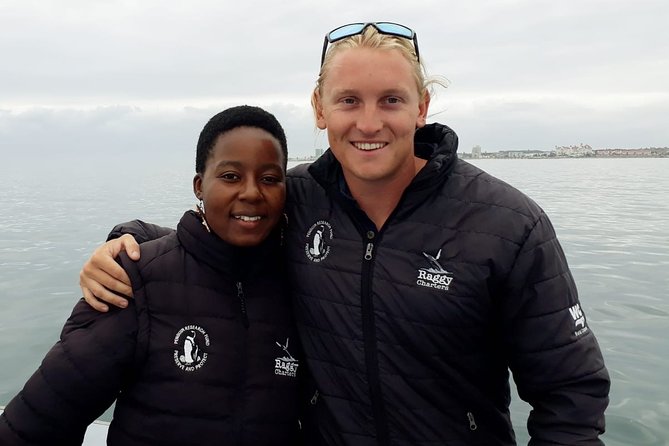
St. Croix Island is the main penguin focus. It is home to an important breeding colony of endangered African penguins, though the colony has suffered a severe decline, with 70 percent lost over a decade according to the information supplied for this outing.
You do not land on the island. The encounter takes place from the catamaran, with the crew positioning the boat so you can look for penguins along the shoreline and in the water.
African penguins are most active in their breeding season from March to May. During that period, you might see chicks from the boat. Outside the peak breeding months, you may still find penguins on the island or swimming out to feed, but numbers and behavior can vary.
The island is also used by African black oystercatchers, white-breasted cormorants, and Cape cormorants. St. Croix Island and the Bird Island group form part of Addo Elephant National Park, allowing rangers to patrol the area.
The penguin stop carries a useful conservation lesson. It is easy to treat a wildlife trip as a search for the closest photograph, but the story here is also about food supply, human pressure, and the fragile future of the colony. One account of the trip noted that fewer penguins are now seen because of overfishing. That is a hard fact, but it gives the encounter context.
More Dolphin Watching in South Africa:
- Hurghada: 3 Islands, Dolphins & Snorkel Yacht Trip w/ Lunch
★ 4.7 · 4,609 reviews - Shell Island Snorkel and Dolphin Catamaran Cruise with Island Time
★ 5.0 · 4,362 reviews - Sunset & Dolphin Catamaran Cruise with Island Time
★ 5.0 · 1,867 reviews - Hurghada: 6 Islands Tour with Dolphin Watching & Snorkelling
★ 4.7 · 1,624 reviews
Seals, seabirds, and the bonus sightings
The cruise is not limited to the three animals in its name. Cape fur seals may be seen resting or swimming, and sharks are among the possible sightings. A report from the trip included a hammerhead shark, but that is best treated as a lucky bonus rather than a normal expectation.
Birdwatchers have plenty to watch. Possible species include Cape gannets, white-breasted cormorants, Cape cormorants, terns, petrels, skuas, shearwaters, and albatrosses.
These birds can be harder to identify than penguins or dolphins. The guide’s role matters here, especially when a bird is distant, flying low, or mixed into a moving group. You may want binoculars, though no binocular provision is listed, so bring your own if bird identification is a priority.
Pelagic birds are tied to the wider food chain. Their presence can tell you something about baitfish, currents, and larger animals nearby. The trip is therefore useful for anyone who wants more than a simple checklist of species.
Why the small catamaran makes a difference
A maximum of 20 people is a real advantage. On a large vessel, a whale may appear on the far side just as you reach the rail. On this boat, you have a better chance of hearing the call to look and moving into a useful viewing position.
The boat’s slower pace also suits the purpose. You are not being driven quickly between fixed attractions. The crew can pause when dolphins approach, spend time watching an animal’s behavior, and adjust the route when conditions change.
The trade-off is that a small boat can feel more exposed in choppy water. One outing took place in rough conditions, with the crew handling the boat well, but you should still consider your own comfort and fitness. The operator asks you to decide for yourself if the trip suits your health and fitness.
People who can board with assistance from family and crew are welcome, and there is no age restriction. The practical limit is boarding itself and your comfort on the water, not a stated age rule.
The conservation message behind the cruise
Raggy Charters presents the trip as an eco-sustainable outing, including a tree-planting campaign to balance its carbon footprint. That does not erase the impact of operating a motorboat, but it shows that the company is trying to address it rather than ignoring it.
The conservation side is also built into the guiding. Jake and the crew explain the local ecosystem, animal behavior, and the pressures affecting species such as African penguins. The best version of this trip is not just a series of sightings. It helps you understand why the bay matters and why responsible viewing is important.
The island’s inclusion in Addo Elephant National Park adds another layer of protection through ranger patrols. You see the island from the sea, but you also learn about the work required to protect it.
I would ask the crew about the penguin decline, overfishing, and how visitors can avoid adding pressure to marine animals. Those questions fit the spirit of the cruise and can turn a pleasant morning into a useful lesson.
Is $185.19 good value?
At $185.19 per person, this is not a bargain boat ride. Its value depends on what you want from the morning.
You are paying for roughly four hours on the water, a small group, a twin-engine catamaran, a dedicated crew, and time spent searching a wide bay for several kinds of marine life. You are also paying for the chance to ask questions instead of receiving only a brief commentary from a distant guide.
The once-daily schedule and maximum of 20 people help explain the price. This is not a high-volume operation built around filling every seat and turning the boat around as quickly as possible.
If your main goal is a guaranteed penguin encounter at close range, the price may feel harder to justify because you view St. Croix Island from the boat and sightings can vary. If you want a focused marine experience that may include whales, dolphins, penguins, seals, and seabirds in one outing, the price is easier to defend.
One practical point is worth noting: booking directly with the operator may offer better value than purchasing the same boat outing through a cruise-ship excursion. The information supplied for this trip specifically notes that a direct booking saved money while using the same boats.
Who should book this Algoa Bay cruise?
I would recommend it to anyone with a genuine interest in marine animals, especially people who appreciate patient searching and good explanation. Families can take part because there is no age restriction and life jackets are available for all ages.
It also suits photographers, though you need patience and a steady hand. Dolphins may move too fast for a perfect frame, and whales may surface only briefly. Look first, photograph second.
Birdwatchers should consider it if they are comfortable with open water and uncertain sightings. The possible mix of cormorants, gannets, terns, petrels, skuas, shearwaters, and albatrosses gives the morning more range than the title suggests.
You may want to skip it if you need a tightly timed activity, dislike boats in choppy conditions, or would be disappointed by a day with no whale sighting. The crew works hard to find animals, but nature does not follow an itinerary.
The experience has earned a 5 out of 5 rating from 687 reviews, with 99 percent recommending it. The most consistent praise centers on the crew’s safety care, warm manner, animal knowledge, and skill in handling the boat. Those are the qualities that matter most when the sea is moving and the wildlife is unpredictable.
Practical details for a smooth morning
Meet at Nelson Mandela Bay Yacht Club, Dom Pedro Jetty, Port Elizabeth Harbour, Gqeberha Central, at 8am. The activity ends at the same place after about four hours.
Confirmation is provided when you book, and the meeting point is near public transportation. The tour has a mobile ticket, so keep the booking available on your phone.
Wear clothing suited to changing sea conditions and bring protection for your phone or camera. The supplied information does not list meals, drinks, or special equipment, so do not assume these are included.
The tour requires good weather. If poor weather cancels it, you can choose another date or receive a full refund. If the minimum number is not met, you receive the same choice of another date or experience, or a full refund.
Free cancellation is available up to 24 hours before the local start time. Cancellations or changes made within 24 hours are not refunded or accepted.
Should you book it?
Book this cruise if you want a small, thoughtful marine outing with a real chance of seeing dolphins and a possible mix of whales, penguins, seals, and seabirds. The crew’s care, the slower pace, and the conservation message give it more substance than a quick sightseeing ride.
Book it during the whale season if whales are your priority, especially from June through early December. Choose March to May if the possibility of seeing penguin chicks matters most.
Skip it if you need guaranteed sightings or a flexible departure time. For everyone else, this is a strong use of a Port Elizabeth morning, especially when you value time on the water, patient guiding, and an honest look at the challenges facing Algoa Bay.
FAQ
Where does the cruise depart?
It departs from Nelson Mandela Bay Yacht Club, Dom Pedro Jetty, Port Elizabeth Harbour, Gqeberha Central, Gqeberha, 6001, South Africa.
What time does the cruise start?
The start time is 8am.
How long does the activity last?
The cruise lasts approximately four hours.
Where does the cruise finish?
It returns to the same meeting point at Nelson Mandela Bay Yacht Club.
How many people can join?
The maximum group size is 20 people.
Can I see whales all year?
No. Humpback whales are seen in Algoa Bay from June to early December, while southern right whales are generally seen close to shore from July to September.
Can I see dolphins throughout the year?
Indo-Pacific bottlenose dolphins can be seen year-round. Common dolphins may also appear year-round, especially farther offshore near baitfish.
Do I get off the boat at St. Croix Island?
The supplied information describes viewing the African penguins from the sea. It does not state that you land on the island.
Is there an age restriction?
No. There is no age restriction, and life jackets are available for all ages.
Can someone with a disability join?
A person who can board with assistance from family and crew is welcome to join. You should also consider your own health and fitness before booking.
What happens if bad weather cancels the cruise?
You are offered another date or a full refund if poor weather causes the cancellation.
What is the cancellation deadline?
You can cancel at least 24 hours before the local start time for a full refund. Changes or cancellations made less than 24 hours before departure are not accepted or refunded.
Just added around South Africa
- Robben Island Museum, Stellenbosch Wineries plus Ferry Tickets★ 5.0 · 4 reviews
- Robben Island Cape Of Good Hope Penguins Including Ferry Ticket★ 5.0 · 3 reviews
- Robben Island Ferry Ticket and Guided Prison Tour★ 3.0 · 160 reviews
- Ferry Tour to Robben Island Museum with One Way Hotel Transfer★ 5.0 · 5 reviews
- Robben Island Nelson Mandela’s Prison Museum + Township Tour incl Ferry Tickets★ 5.0 · 9 reviews
- Cape Town Half-Day Robben Island Tour with Ferry Ticket★ 4.5 · 13 reviews
- Nelson Mandela’s Robben Island Prison Museum Cape Town City Tour + Ferry Tickets★ 5.0 · 7 reviews
- Boulders Beach Penguins and Seal Island Boat Trip Half Day Tour★ 4.0 · 9 reviews
South Africa Island Hopping Tours, compared.

Robben Island Ferry Ticket and Guided Prison Tour
Read our review →
Robben Island Ferry Tour with 1-Way Hotel Pickup
Read our review →

Robben Island Ferry with Prison Ticket and Tour
Read our review →
Robben Island Ferry Ticket and Guided Prison Tour
Read our review →
ROBBEN ISLAND MUSEUM TOUR, WITH OPTIONAL LAST MINUTE TICKETS
Read our review →
Browse the lists this tour appears in