
REVIEW · NEW ZEALAND
Auckland: Tiritiri Matangi Island Ferry
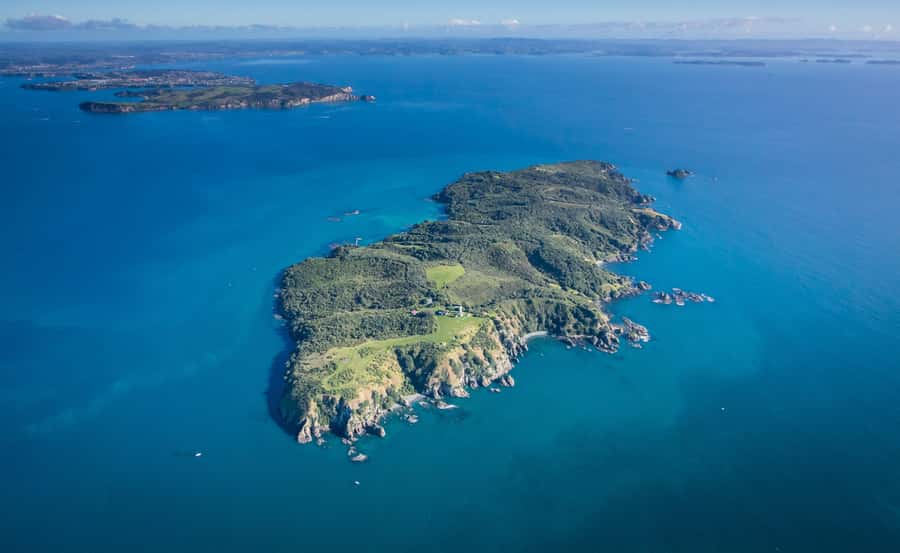
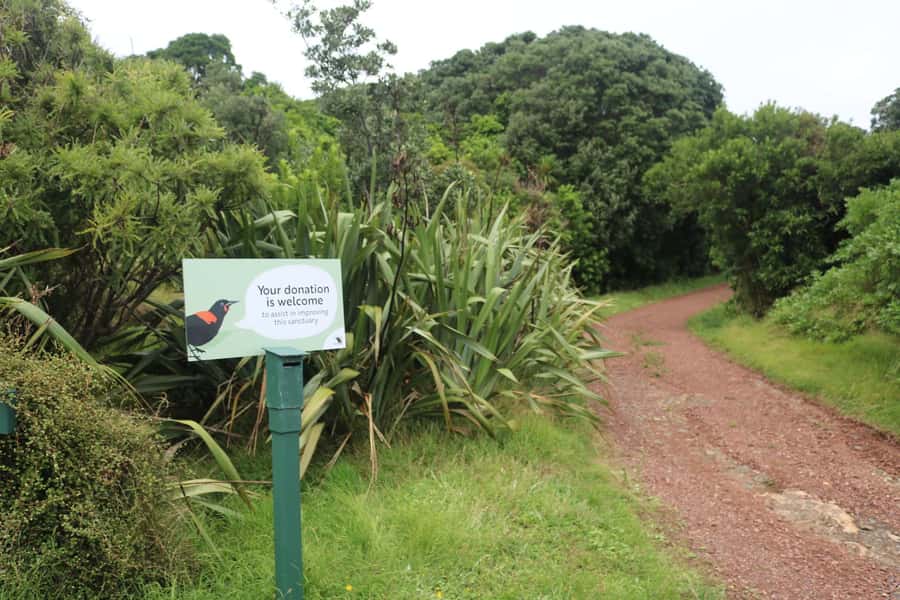
Tiritiri Matangi is the sort of island where the birdsong reaches you before the birds do. After an 80-minute cruise across the Hauraki Gulf, you have several hours to walk through recovering native forest, visit New Zealand’s oldest working lighthouse, and watch for rare birds that are hard to find near Auckland.
I like two things especially: the island gives you a real sense of conservation in action, and you can choose between a guided walk, quiet independent trails, or a swim at a sandy beach. The main drawback is time. The island schedule is generous on weekends, but the weekday visit can feel short if you want to walk several tracks and still make time for Hobbs Beach.
Key points
- Rare wildlife in a pest-free sanctuary: Watch for kōkako, takahē, tīeke, tuatara, and other native species.
- A scenic ferry ride: The trip from Auckland takes about 80 minutes, with seating, toilets, and snacks or drinks available onboard.
- Flexible island time: Join a guide or set off on your own along tracks through forest, cliffs, and beaches.
- A historic lighthouse: Tiritiri Matangi is home to New Zealand’s oldest working lighthouse.
- Swimming is possible: Bring swimwear and a towel for the island’s quiet sandy beaches.
- Bring your lunch: There are no food outlets on the island, so pack food in a sealed container and bag.
Why Tiritiri Matangi feels different from Auckland
Tiritiri Matangi is a pest-free island sanctuary in the Hauraki Gulf, and that one fact shapes the whole visit. Native birds can feed, nest, and move through the forest with far less pressure from introduced predators. You are not simply looking at a pretty island. You are seeing the result of long-term conservation work.
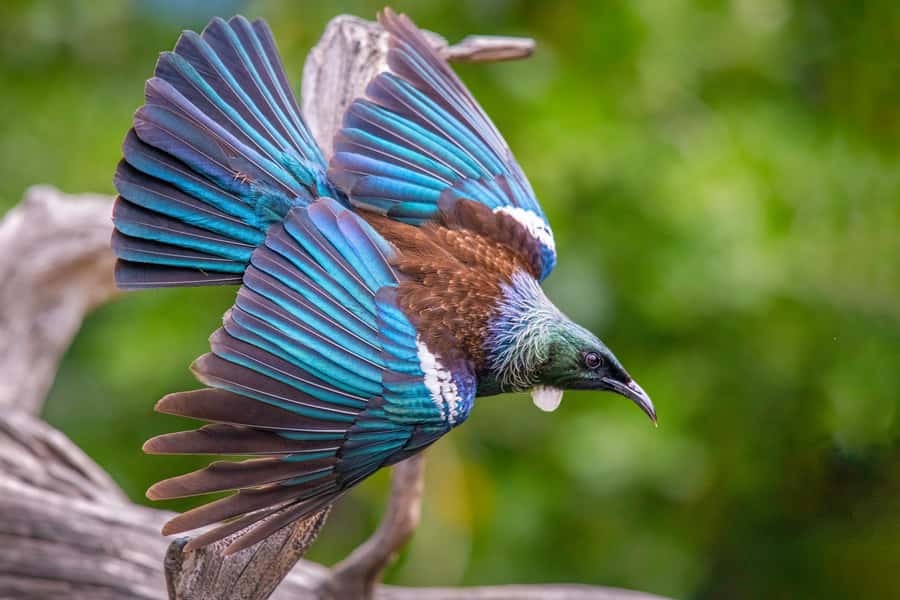
The most prized sightings include kōkako, tīeke, or saddleback, takahē, and tuatara. None is guaranteed, and birdwatching always depends on luck, weather, and patience. Still, the island gives you a much better chance than an ordinary Auckland park, especially if you slow down near feeding stations, birdbaths, and quiet sections of track.
The sound is part of the reward. Native birdsong can follow you along the paths, sometimes close enough that you stop walking and search the branches. You might also spot a large wētā or a tuatara resting quietly beside the track. Several visitors have had memorable tuatara sightings, but you should treat any rare animal as a bonus rather than an expected part of the timetable.
More Ferry Trips in New Zealand
- Waiheke Island: Ferry & Hop-On Hop-Off Explorer Bus Tickets
★ 4.6 · 3,311 reviews - Auckland to Rangitoto Island Ferry
★ 4.0 · 109 reviews - Auckland: Man O’ War Vineyard Ferry (Waiheke Island)
★ 4.3 · 10 reviews
The ferry from Auckland or Gulf Harbour
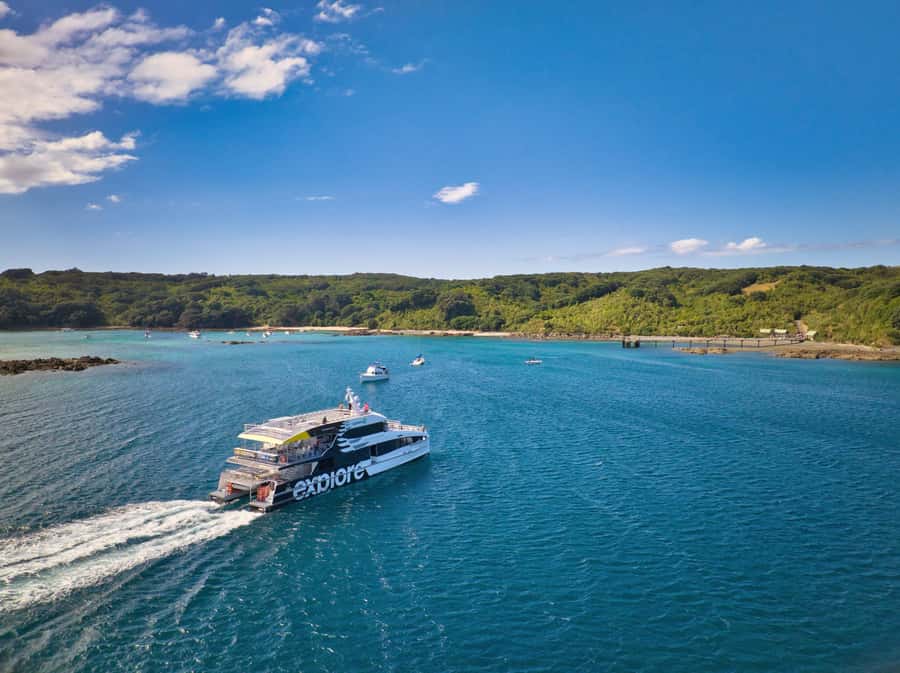
You have two starting points. From the Explore Group kiosk near Auckland’s Maritime Museum, the ferry leaves at 9:00 am from Wednesday through Friday and at 8:30 am on Saturdays, Sundays, and public holidays. You should arrive about 30 minutes early for check-in.
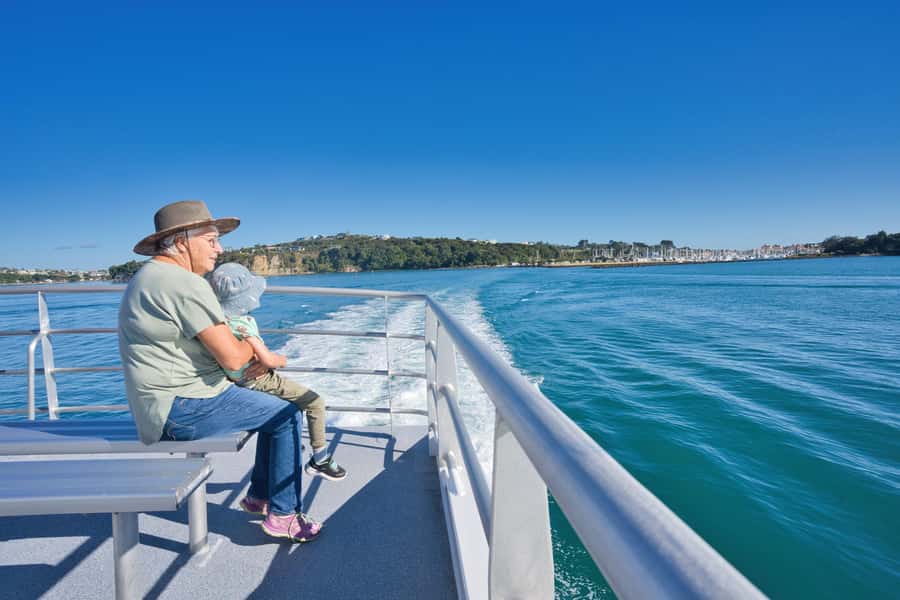
The Auckland crossing takes about 80 minutes. That is long enough to feel like a proper boat trip, not just a quick transfer, and the route across Tikapa Moana, the Hauraki Gulf, is an enjoyable part of the day. The ferry has indoor and outdoor seating, toilets, and a place to buy snacks and drinks. A smooth crossing is common, but wind can still make the open deck lively, so bring a hat and a light layer.
Gulf Harbour is the other option. The ferry departs there at 9:55 am on Wednesday through Friday and at 9:25 am on weekends and public holidays. From Gulf Harbour, the ride to the island takes about 25 minutes. This is the better choice if you are already staying or driving on Auckland’s northern side and do not need the longer harbor cruise.
The trade-off is simple. Auckland gives you a more scenic boat outing but requires a longer day. Gulf Harbour cuts the ferry time and may suit a northern Auckland itinerary better. At Gulf Harbour, wait at the top of the ramp at the ferry terminal rather than at the Auckland booking kiosk.
Arriving at the island sanctuary
The ferry reaches Tiritiri Matangi at 10:20 am on Wednesday through Friday and at 9:50 am on weekends and public holidays. Once ashore, you have free time to decide how you want to use the island.
You can join a guided walk if one is available, or follow the tracks independently. Guides such as Malcolm Pullan, Tina, Vishnu, and Anne have made a strong impression with their explanations of birds, plants, island history, and conservation work. Vishnu has been praised for keeping his group together while still making the walk feel personal, and Malcolm Pullan is known for bringing the island’s natural story to life.
A guide is especially useful if you do not know New Zealand birds by sight or sound. You might hear a bird long before you see it, and a guide can point out the difference between an ordinary forest sound and a rare species nearby. On the other hand, independent walking gives you more control. You can pause at a birdbath, take a quieter side track, or sit in the forest without feeling that you need to keep pace.
The island has an information centre and a small gift shop near the main arrival area. These are useful first stops for orientation, especially if you want to understand the conservation project before walking farther. Do not expect a full range of supplies. There are no shops selling lunch, water, or beach items, so pack what you need.
Walking tracks, birds, and the best use of your time
The walking tracks pass through regenerating native forest, open sections, cliff tops, and beach areas. You do not need to be a serious hiker to enjoy the island, but comfortable shoes matter. The paths are generally easy to stroll, yet the island is not completely flat, and a full day of walking can be tiring.
If you are visiting on a weekday, the ferry schedule gives you roughly four hours on the island. That is enough for a good walk and some time near the lighthouse, but you will need to choose your priorities. The weekend and public holiday schedule gives you much more time, from arrival at 9:50 am until departure at 4:00 pm.
The main tracks are easy to follow in general, but signage can be confusing in places. Hobbs Beach and Hobbs Track have caused some visitors to miss the beach trail or take a steep, unclear route. I would keep a close eye on signs and avoid improvising a shortcut down an obvious slope. If you are unsure, return to the marked path instead of turning a pleasant walk into a rough climb.
The smaller tracks are worth considering when the main route feels busy. They may bring you into quieter forest where bird calls are easier to hear. Move slowly, keep your voice down, and look toward the ground as well as the canopy. A tuatara is not likely to announce itself, and a wētā may be easier to spot on a trunk or beside the path than high in the trees.
The island’s birdlife is the heart of the experience, but you need realistic expectations. You may see several species, or you may mainly hear them. One particularly rewarding approach is to spend time around feeders and birdbaths, where birds often come close enough for a clear look. You should never feed animals yourself. The island’s rules also ask you not to touch plants, leave litter, or use drones.
More Ferry Trips in Auckland:
- Waiheke Reserve Ferry Service to Waiheke Island
★ 4.5 · 9 reviews - Rotoroa Island Ferry – from Auckland
★ 5.0 · 8 reviews - Man O’ War Winery on Waiheke Island – Ferry from Auckland
★ 3.0 · 2 reviews - New York City: Statue of Liberty & Ellis Island with Ferry
★ 4.6 · 18,683 reviews
The lighthouse and the island’s conservation story
Tiritiri Matangi’s lighthouse is the oldest working lighthouse in New Zealand, giving the walk a clear historical point of interest. It is not just another photo stop. The lighthouse helps you understand the island’s role in guiding ships through the Hauraki Gulf, while the surrounding sanctuary shows how its natural future has been carefully rebuilt.
The contrast is what makes the visit worthwhile. You can look toward the sea from dramatic cliff tops, then turn inland and hear native birds moving through recovering bush. The setting feels far removed from central Auckland, even though the island can be reached in a morning.
I would not rush past the information centre or the lighthouse simply to chase another bird sighting. The sanctuary works best when you understand what you are seeing. Tiritiri Matangi protects precious populations that are difficult to find elsewhere around Auckland, and the island’s restored forest is central to that success.
Hobbs Beach, swimming, and a slower afternoon
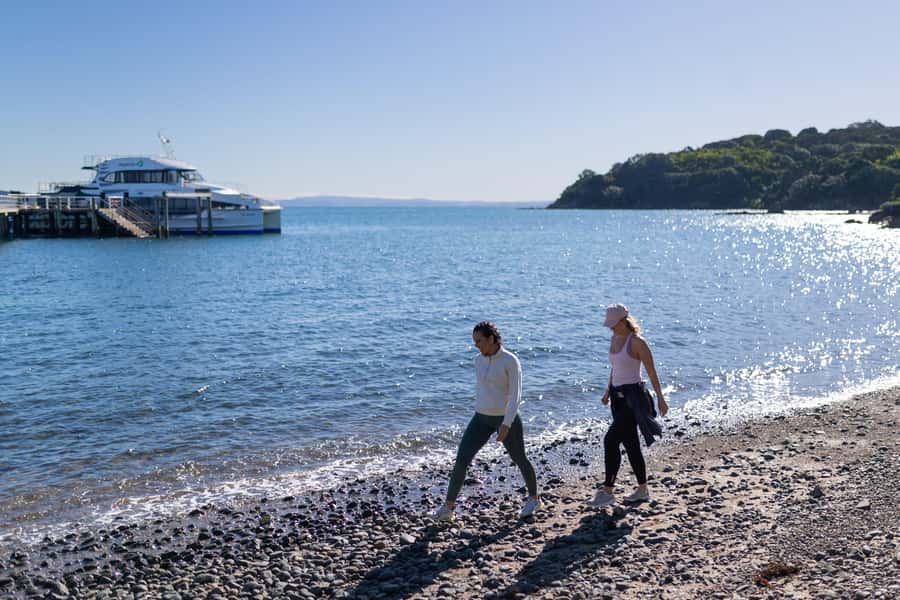
Hobbs Beach offers a pleasant change from the forest tracks. The sandy shore is quiet, and swimming or snorkeling is included in the possibilities for your free time. Bring swimwear, a towel, sunscreen, and enough water. Do not count on buying any of these items on the island.
The beach is best for you if you like adding a relaxed pause to a walking day. You can make a quick visit, or save it for the end of your route and swim before returning to the ferry. On a weekday, allow enough time to get back to the departure point without rushing. On weekends, the longer island stay makes a beach stop much easier to fit in.
The water conditions can change, and the activity description does not promise supervised swimming or snorkeling. Check the weather before you go and use your judgment. The ferry operator’s schedule matters, so keep track of departure time rather than wandering too far from the return route.
How much time do you get on Tiritiri Matangi?
The timetable changes by day:
- Wednesday through Friday: Depart Auckland at 9:00 am, arrive at the island at 10:20 am, and leave the island at 2:40 pm. You return to Auckland at 4:00 pm.
- Saturday, Sunday, and public holidays: Depart Auckland at 8:30 am, arrive at 9:50 am, and leave the island at 4:00 pm. You return to Auckland at 5:20 pm.
From Gulf Harbour, the island arrival is at 10:20 am on weekdays and 9:50 am on weekends. The return ferry reaches Gulf Harbour at 3:05 pm on weekdays and 4:25 pm on weekends.
The weekday version works well for a focused visit. I would use it for one main walk, the lighthouse, and a little time around the visitor centre or beach. The weekend version is better if you want to walk at an easy pace, stop often for birds, swim, and explore more than one route.
What the $65 price includes
At $65 per person, the fare includes the ferry cruise, access to the island’s walking tracks, and the chance to swim or snorkel. It does not include hotel pickup, food, drinks, or a dedicated private guide.
I think the price is fair if you value the ferry ride and the conservation setting as much as the sightseeing. You are paying for transport to a protected island that is not available by ordinary public ferry, plus several hours to explore. The value is strongest for bird lovers, photographers, walkers, and anyone who wants a nature day rather than another city attraction.
The value is less clear if you dislike boats, do not enjoy walking, or want a tightly programmed tour with constant commentary. You can spend a large part of the day simply getting to and from the island, although the ferry ride is one of the better parts for many people.
The ferry may offer snacks and drinks, but I would bring lunch and extra water. Pack food in a sealed container and bag, and carry all rubbish back with you. That small bit of planning makes the island visit much easier.
Practical advice for a better island day
Wear comfortable walking shoes, even if you plan to spend time at the beach. Add a hat, sunscreen, water, swimwear, a towel, and a camera. Check the weather before departure because wind and rain can change how enjoyable the ferry and exposed cliff tracks feel.
Arrive 30 minutes before departure. At Auckland, check in at the Explore Booking Kiosk diagonally opposite the Maritime Museum. At Gulf Harbour, wait at the top of the ferry terminal ramp.
The experience is not suitable for wheelchair users, and anyone with an injured ankle or limited stamina should think carefully about the amount of walking. One older visitor still enjoyed the island but found the day tiring with an ankle injury. You can walk at an easy pace, yet the combination of uneven paths, slopes, and several hours outdoors adds up.
This is also not a place for bicycles, drones, smoking, feeding animals, littering, or touching plants. Those rules are not minor technicalities. They protect the sanctuary that makes the island special.
Free cancellation is available up to 24 hours before departure, and you can reserve now and pay later. That is useful if your weather plans are still changing, but I would still watch the forecast closely before choosing your day.
Who should book the Tiritiri Matangi ferry?
I would book this trip if you want rare New Zealand wildlife, quiet walking, and a strong conservation story within reach of Auckland. It is particularly good for birdwatchers, families with older children, photographers, and walkers who enjoy setting their own pace.
I would choose the weekend schedule if this is your only visit or if you want to include Hobbs Beach. I would choose Gulf Harbour if you are already in that part of Auckland and want to shorten the boat ride. If a guide is available, join the walk at least once, then use your remaining time independently.
Skip it if you need step-free access, dislike outdoor conditions, or want a short attraction that fits neatly between other Auckland stops. For everyone else, Tiritiri Matangi offers an unusually close look at native New Zealand life, with a lighthouse, beaches, and a memorable ferry crossing included in the day.
FAQ
How long is the ferry from Auckland to Tiritiri Matangi?
The ferry takes about 80 minutes each way from Auckland’s Viaduct area. From Gulf Harbour, the crossing takes about 25 minutes.
Where can I board the ferry?
You can depart from the Explore Group location near Auckland’s Maritime Museum or from the ferry terminal at Gulf Harbour. The meeting point depends on the option you book.
How much time do I get on the island?
From Wednesday through Friday, you arrive at 10:20 am and leave at 2:40 pm. On Saturdays, Sundays, and public holidays, you arrive at 9:50 am and leave at 4:00 pm.
Can I swim or snorkel at Tiritiri Matangi?
Yes. Swimming and snorkeling are possible at the island’s beaches. Bring your own swimwear and towel.
Is food available on the island?
No. There are no food outlets on the island. Bring your own lunch, snacks, and drinks in a sealed container and bag, or purchase refreshments on the ferry.
What should I wear and bring?
Wear comfortable walking shoes and bring a hat, sunscreen, water, swimwear, a towel, a camera, and snacks. Check the weather before you leave.
Can I explore without joining a guide?
Yes. You have access to the walking tracks and free time to explore independently. An English-speaking guide may also be available to explain the island’s birds, plants, conservation work, and history.
Is the trip suitable for wheelchair users?
No. The experience is not suitable for wheelchair users. You should also consider the walking involved if you have an injury or limited stamina.
Just added around Auckland
- Auckland: Tikapa Moana Dolphin, Whale and Island Cruise★ 4.0 · 17 reviews
- Waiheke Reserve Ferry Service to Waiheke Island★ 4.5 · 9 reviews
- Bay of Islands Discovery Experience from Auckland incl. Hole In The Rock Cruise★ 5.0 · 12 reviews
- Auckland Region | Island Hopper Package Tour (2 Guests Minimum)★ 5.0 · 2 reviews
- Rotoroa Island Ferry – from Auckland★ 5.0 · 8 reviews
- Man O’ War Winery on Waiheke Island – Ferry from Auckland★ 3.0 · 2 reviews
- Bay of Islands 2-Day Small Group Tour & Cruise from Auckland★ 5.0 · 33 reviews
- Auckland: Bay of Islands Day Tour with Dolphin Cruise★ 5.0 · 11 reviews
New Zealand Island Hopping Tours, compared.
Paihia/Russell: Hole in the Rock Cruise with 2 Island Stops
Read our review →
Paihia/Russell: Hole in the Rock, Dolphins & Island Cruise
Read our review →
Hole in the Rock Cruise & Island Tour – with two island stopovers
Read our review →
Bay of Islands Tall Ship Sailing on R. Tucker Thompson Including BBQ Lunch
Read our review →

Island Hopper Day Cruise – sailing to wildlife sanctuary island – 6 hr cruise
Read our review →
Tikapa Moana Whales, Dolphins and Islands Cruise
Read our review →Browse the lists this tour appears in